Key facts
| Markets considered | United States, United Kingdom and European Union |
|---|---|
| Commercial basis | Specification, quantity, components, Incoterm and named place |
| Available sizes | Perfume: 30 ml, 50 ml and 100 ml. Other formats follow the selected bottle or vessel |
| Incoterms | EXW, FOB, DDP |
| Production lead time | Approximately 4–6 weeks after approvals for standard products |
What the manufacturer controls
- One project file should connect formula, components, artwork and quality release
- Three destination pathways are considered separately: United States, United Kingdom and European Union
- 30 ml, 50 ml and 100 ml are common perfume planning sizes, subject to component availability
What a perfume manufacturing partner should control
Unit price is the last thing to compare, not the first. Development work, documentation, component minimums and revision limits all change what the same figure actually buys. Ask each supplier what is included and what is quoted separately, then compare the totals.
Choosing the market route
The same manufactured product enters three regulatory systems through three different doors, and the difference is administrative rather than physical. Picking the destination early matters because the responsible-person appointment, the notification route and the label content all branch from it, and all three sit upstream of artwork approval.
- United States — MoCRA facility and listing obligations, a US-established responsible person, and an importer of record who owns customs classification and duty. Transport of alcoholic fragrance is confirmed with the carrier per route.
- United Kingdom — an independent Great Britain regime with a UK Responsible Person, SCPN notification before market placement, and Northern Ireland assessed on its own footing rather than folded into a generic UK label.
- European Union — Regulation 1223/2009 with a safety report, product information file and CPNP notification, an EU-established Responsible Person, and mandatory particulars in the language of each selling country.
Brands selling into more than one of these plan the overlap deliberately: one formula and one component set can serve all three, while the compliance file, the notification and the artwork are prepared per route.
Where manufacturing ends and brand duty begins
A manufacturer can supply agreed formula and production evidence, but the brand and its appointed market operators retain their own legal duties. A US responsible person, a UK Responsible Person and an EU Responsible Person are different roles. Their required data should shape the project before artwork is printed.
The manufacturing agreement should state what the supplier provides and what remains with the brand, importer, distributor or Responsible Person. Formula documents, component declarations, quality records and transport data have different purposes. Their availability and scope should be agreed before the buyer assumes that a finished batch is ready for a particular channel.
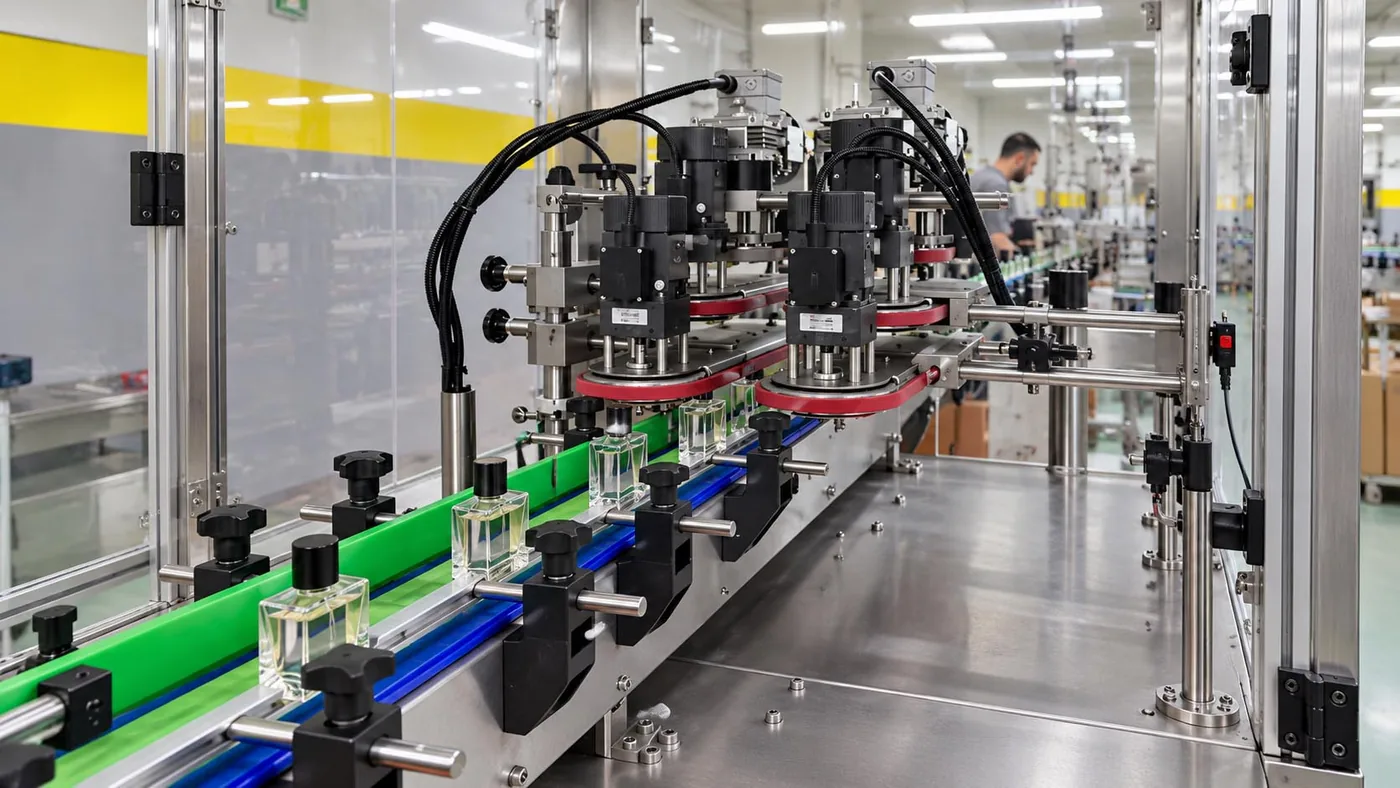
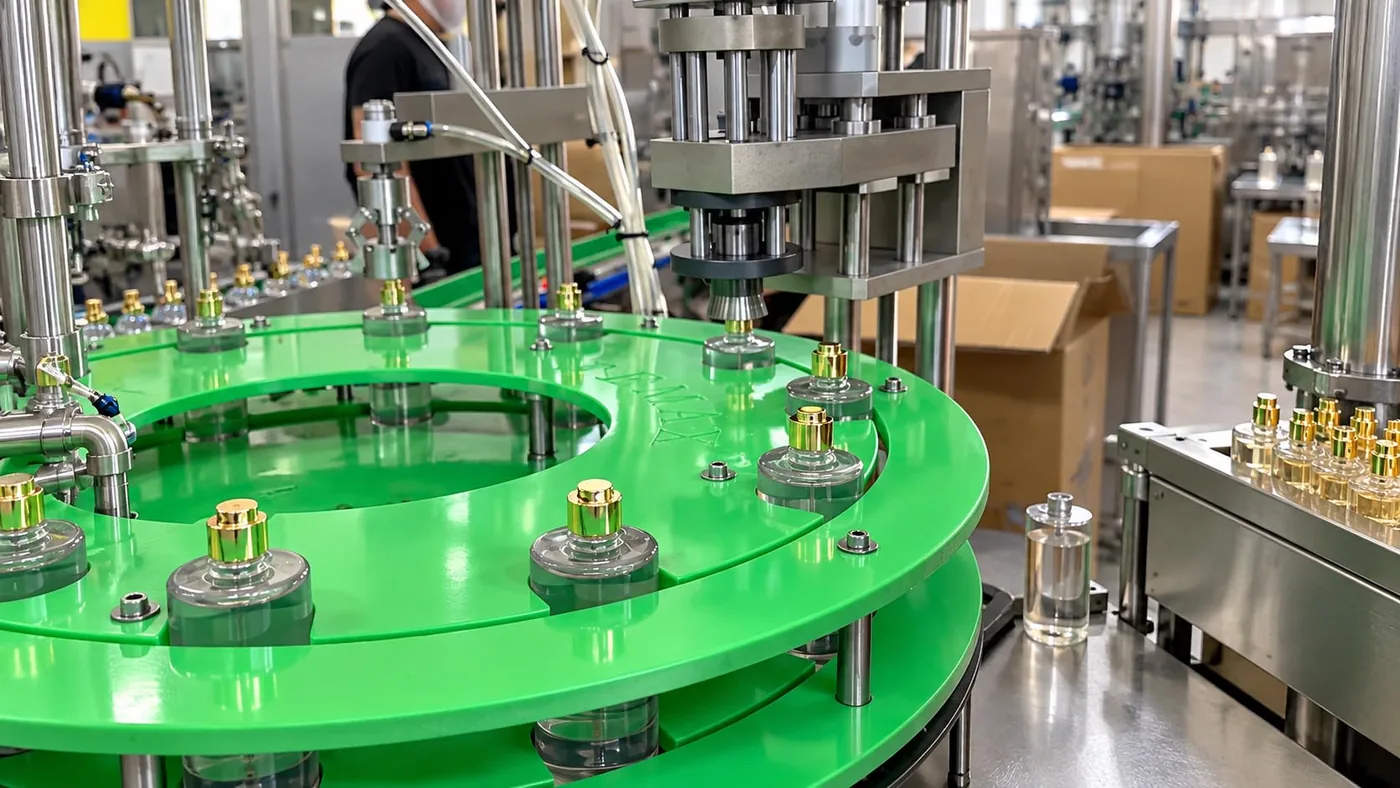
Filling and capping
Filling and capping run on the same line; the photographs below are from the Esenyurt facility.
From brief to released batch
- Brief: define the product format, destination market, quantity, sales channel and deadline, plus any decision already fixed.
- Feasibility: confirm the formula route, the component list, the documentation scope and the commercial limits the project has to fit.
- Samples: evaluate coded references against written criteria rather than impressions, so a preference can be defended later.
- Approval: lock the formula, components, artwork, pack configuration and quotation together; changing one after this point reopens the others.
- Production and shipment: inspect, release and dispatch under the agreed Incoterm and named place.
Durations are inserted only after verified company lead times and project-specific component availability are known.
Frequently asked questions
Which sourcing model should a first collection use?
A first collection usually works best with a library fragrance and stock components, because a weak concept can be replaced without writing off tooling. Bespoke development and dedicated moulds are easier to justify once a product has proven sell-through.
Can one fragrance run across several product categories?
Often yes, but each format needs its own compatibility check. A compound approved in alcoholic perfume may behave differently in candle wax or a diffuser base, so approval is granted per format rather than once for the identity.
Do the three market pages describe different products?
No. They describe the same manufacturing capability entering three regulatory routes. The product specification can be shared; the responsible-person roles, notification systems and label content cannot.
What decides the launch quantity?
Three minimums are assessed separately: the compounding batch, the per-fragrance minimum and the purchase minimum for each component. The binding figure is whichever is highest, which is why a single MOQ number is misleading.
What should a first enquiry contain?
Destination market, product format, estimated quantity, fragrance direction, packaging level and target date. Those six items are enough to say what is feasible and what still needs a sample round.
Related pages
- Contract Manufacturing for Fragrances
- Perfume Glossary
- Private Label Perfume Manufacturing
- Perfume Bottle Models
- Perfume Caps
- How to Select a Private Label Perfume Manufacturer
- Contact Private Label Perfumery
- Turkey vs China vs France for Perfume Production
- Fragrance Sample Kit and Approval Process
Production evidence and documentation
Review the quality control and fragrance documentation framework before final approval.
Send a project brief
Include the destination market, estimated quantity, product format, packaging direction, target date and decisions that are already approved. Unverified values will be confirmed during feasibility and quotation rather than treated as facts.
Request project reviewFor brands selling in Europe, review the private label perfume manufacturer Europe route before approving formula and artwork.