Private Label Perfumery is a fragrance contract manufacturer in Istanbul, Turkey. It produces to an approved specification and supplies batch documentation, while the brand or its importer holds market-access duty and arranges storage and distribution. Perfume production starts at 1,000 units per fragrance and per bottle model, on a 4–6 week schedule after approvals.
The five models, and what actually differs
Contract manufacturing, private label, white label, OEM and ODM are often used interchangeably by suppliers, which makes quotations hard to compare. The distinction that matters commercially is not the label on the offer but the answer to four ownership questions: who holds the fragrance formula, who paid for and controls any mould or tooling, who owns the artwork files, and whose name sits on the compliance record. A supplier can be generous on one and restrictive on another.
| Model | Formula | Tooling / mould | Artwork |
|---|---|---|---|
| Contract manufacturing | Brand supplies or commissions it | Usually brand-funded | Brand |
| Private label | Supplier library, brand selects | Supplier stock components | Brand |
| White label | Supplier, shared across customers | Supplier stock components | Brand applies its own |
| OEM | Brand specification, supplier builds to it | Negotiated per project | Brand |
| ODM | Supplier design, offered to the market | Supplier | Supplier template or brand |
Formula ownership is a permission, not a possession
Buyers often ask to "own the formula" and receive an answer that sounds like agreement but is not. In practice ownership is a bundle of permissions: the right to have the compound made by another perfumer, the right to receive the full ingredient breakdown, the right to prevent the same compound being sold to a competitor, and the territory and duration over which any of that applies. Each can be granted separately.
An exclusivity clause without a documented handover route is fragile. If a supplier holds the compound and the brand holds only a code, changing manufacturer means re-developing the scent, which resets samples, approvals and shelf continuity. The specification should state what the brand receives on exit and in what format.
Documentation flow in a fason arrangement
The paperwork is what separates a manufacturing relationship from a purchase. A working set normally includes the compound safety data sheet, the IFRA conformity statement for the applicable product category and dosage, the allergen declaration, component technical drawings with supplier codes, the approved artwork revision, and the batch release record for each production run.
Who issues each item, and who is entitled to keep a copy, should be settled before the first order rather than requested during a customs check or a retailer audit. Documents that exist but cannot be released to the brand are, for practical purposes, missing.
Choosing a model for the project in front of you
A first collection with an untested concept is usually better served by a library fragrance and stock components: the brand spends on positioning and packaging rather than on tooling, and a weak scent can be replaced without writing off a mould. A repeat product with proven sell-through justifies a bespoke compound and, if volumes support it, dedicated tooling.
Cost comparison only becomes meaningful once the models are aligned. A quotation for white label and a quotation for contract manufacturing are not comparable line by line, because the second contains development, documentation and often component investment that the first excludes. Normalising the scope before comparing price is the single most useful step a buyer can take.
What a fragrance contract manufacturing organisation does
Buyers increasingly search for a contract manufacturing organisation — a CMO — rather than a factory, and the distinction is real. A factory fills bottles. A contract manufacturing organisation carries the work around the filling: formula sourcing or development, component specification and procurement, compatibility testing, production scheduling, quality release, batch documentation and export preparation.
The practical test is what happens when something is not straightforward. If a cap supplier misses a date, does the organisation propose a qualified alternative and re-test compatibility, or does it report the delay and wait? If a destination market asks for a document, does it exist already or does it have to be created? A CMO is defined by the second answer in each pair.
| Function | Filling service | Contract manufacturing organisation |
|---|---|---|
| Formula | Supplied by the brand | Sourced, developed or matched, with sampling control |
| Components | Supplied by the brand | Specified, procured and compatibility-tested |
| Documentation | Delivery note | SDS, IFRA-related information, batch and inspection records |
| Market access | Not in scope | Prepared for the destination; responsible-party duty identified |
| Reorder | New purchase order | Measured against the coded reference and the approved specification |
What differs by product category
Contract manufacturing for perfume, cologne and home fragrance is not one service with three labels. The commercial and technical shape changes with the category.
| Category | What the engagement turns on | Minimum, per fragrance |
|---|---|---|
| Perfume | Concentration, alcohol base, pump dosage and the crimped closure system | 1,000 units |
| Cologne | The opening rather than long development; splash, spray or pump changes both evaluation and release | 1,000 in glass; 2,000 in plastic |
| Home fragrance — diffuser | Diffusion in a room over weeks; reed, collar and vessel compatibility over months of contact | 1,000 units |
| Home fragrance — room spray | Immediate impression and how quickly it clears; spray pattern at release | 500 units |
| Scented candle | A burn test, not a scent test: wax, wick, vessel and fragrance load approved as one system | 500 units |
| Car fragrance | Release rate in a small hot cabin; the carrier decides more than the composition | 2,000 units |
| Alcohol-free roll-on | Ball, housing and oil viscosity tested together; no dangerous-goods classification | 1,000 units |
Production runs approximately 4–6 weeks after approvals for standard products, measured from the point where formula, components, artwork and quotation are locked.
“Manufacturing partner” — what the word should mean
Suppliers describe themselves as partners freely. The word is worth something only if four things are true, and each is checkable before an order:
- The scope is written down. Which duties sit with the manufacturer and which stay with the brand, importer or Responsible Person — in the agreement, not in an email.
- Change control exists. A formula or component revision triggers a documented step rather than a silent substitution.
- The record survives the run. Batch and inspection records tie a delivered consignment to the approved specification, so a later complaint is answerable rather than arguable.
- Reorders are measured, not repeated. The second production is compared against the coded reference, not against the previous delivery.
A supplier who is vague on any of the four is offering a transaction. That can be the right choice for a first small run — but it should be a decision, not a discovery.
Packaging under the same roof
Filling and boxing happen here; the artwork on those boxes does not. Design is a separate discipline — browse packaging design work or read where artwork meets the production specification.
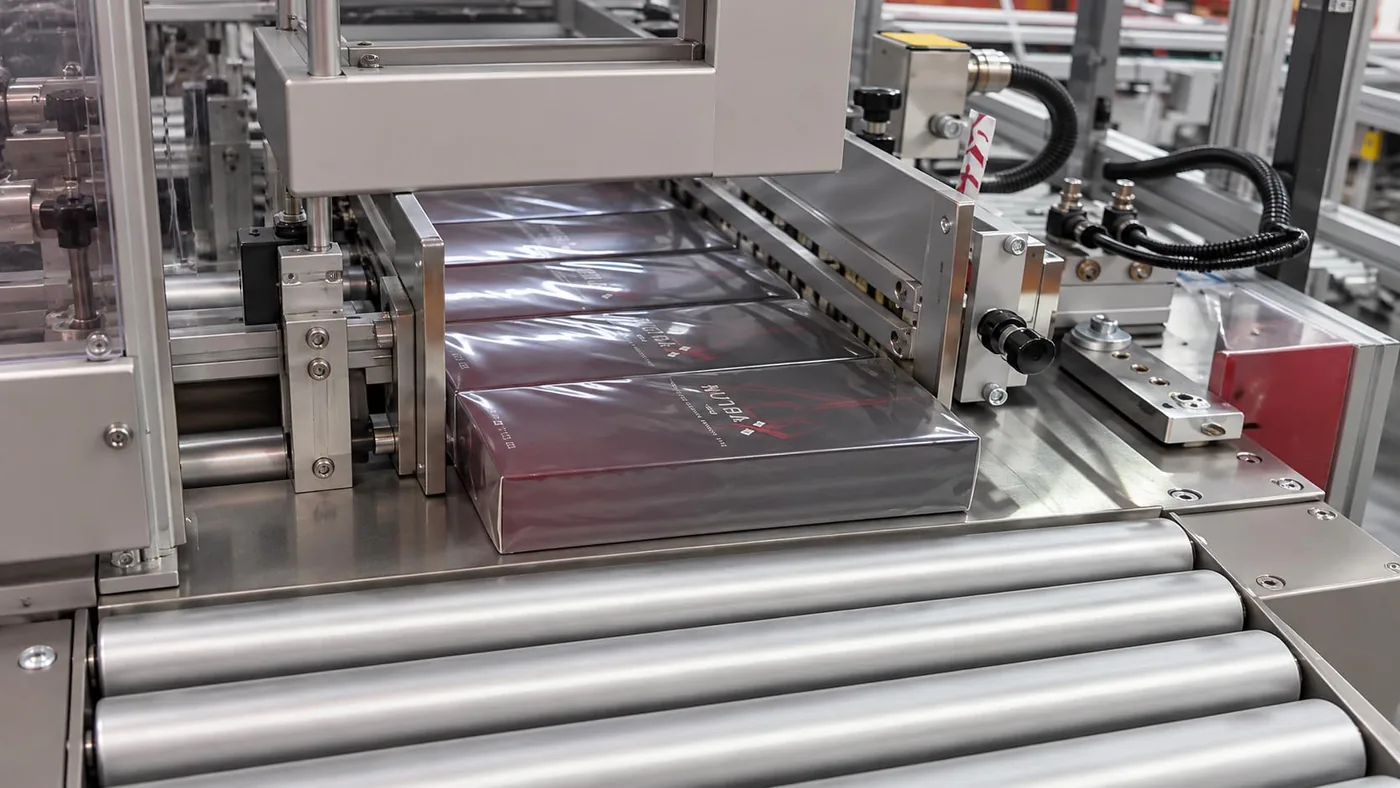
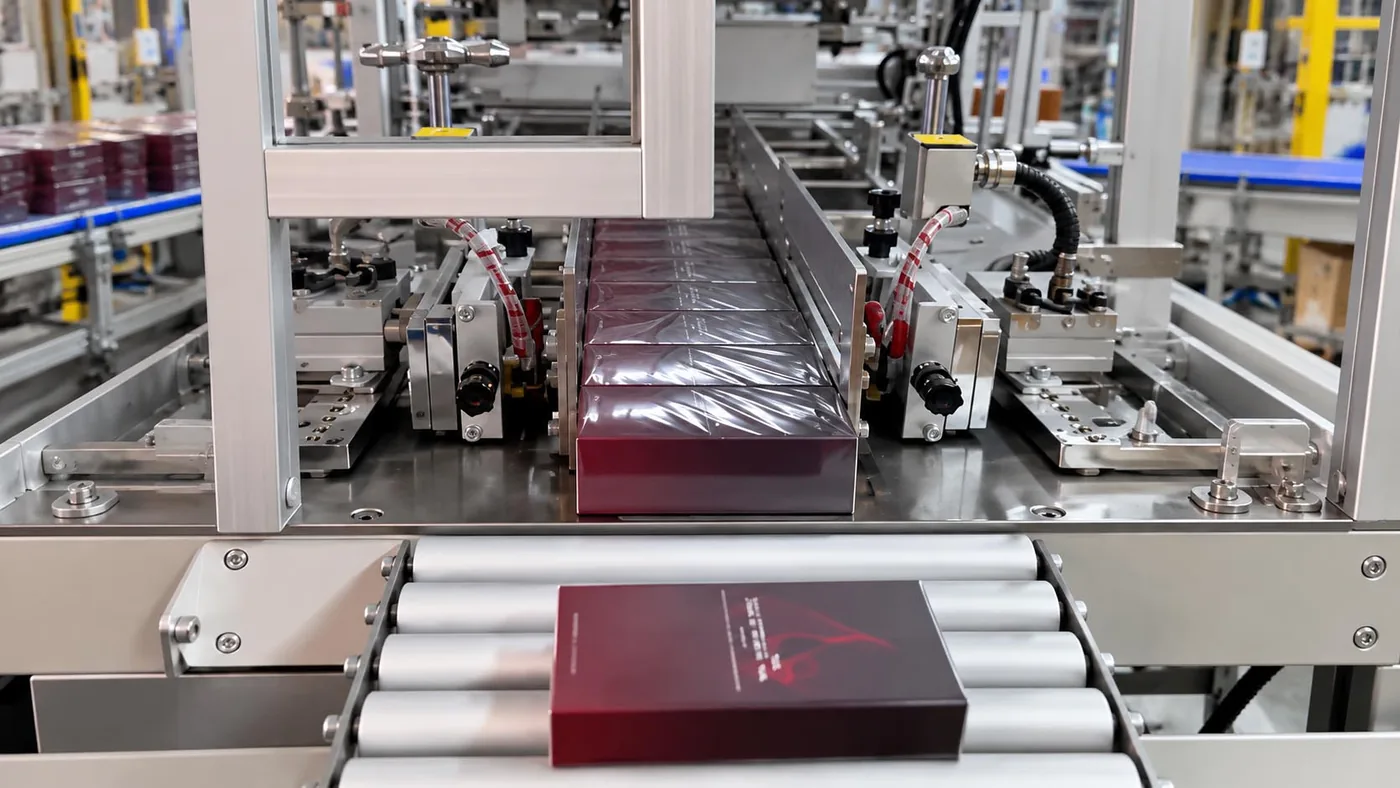
Boxing and film wrapping sit on the same site as filling, which is what separates a contract manufacturer from a logistics provider.
Contract manufacturing is not 3PL
The two are searched together and are frequently confused. They solve different problems and can be held by different companies.
| Contract manufacturing | 3PL / third-party logistics | |
|---|---|---|
| Makes the product | Yes | No |
| Holds the specification | Yes | No |
| Stores and picks stock | Not usually | Yes |
| Ships to the end customer | To the importer or named place | To the buyer, often per order |
| Carries compliance records | Manufacturing side | Transport side |
A brand shipping alcohol-based perfume needs both questions answered separately: who manufactures under specification, and who holds and dispatches the stock in the destination market. Private Label Perfumery covers the first; the second is arranged by the brand or its importer.
Contract manufacturing for the United States
US enquiries are the largest single market group in this category, and they carry an extra layer. MoCRA duties are recurring rather than one-off: facility registrations renew every two years and cosmetic product listing information is updated annually. A contract manufacturing arrangement therefore has to name who holds the responsible-person duty and who maintains that calendar — before the first order, not after.
The manufacturer supplies the formulation and component data that feeds safety substantiation; the responsible person holds the substantiation and the listing. Alcohol-based products also require a carrier-approved dangerous-goods pathway, confirmed before production release rather than at booking.
Manufacturing location does not move any of these duties. A product made in Turkey and sold in the United States carries the same MoCRA obligations as one made anywhere else.
Related guides
- OEM vs Private Label Fragrance
- Fragrance Formula Ownership
- How to Select a Private Label Perfume Manufacturer
- Perfume Manufacturer Request for Quotation
- Stock Bottle vs Custom Mould
- Turkey vs China vs France for Perfume Production
- Private Label Perfume Case Studies
Start a project
Send the product category, the model you think you need and the ownership terms that matter to you. The reply can confirm which parts are available as described and which need a different arrangement.
Start a projectEuropean projects should connect the manufacturing agreement to fragrance development and private label perfume manufacturing for Europe.