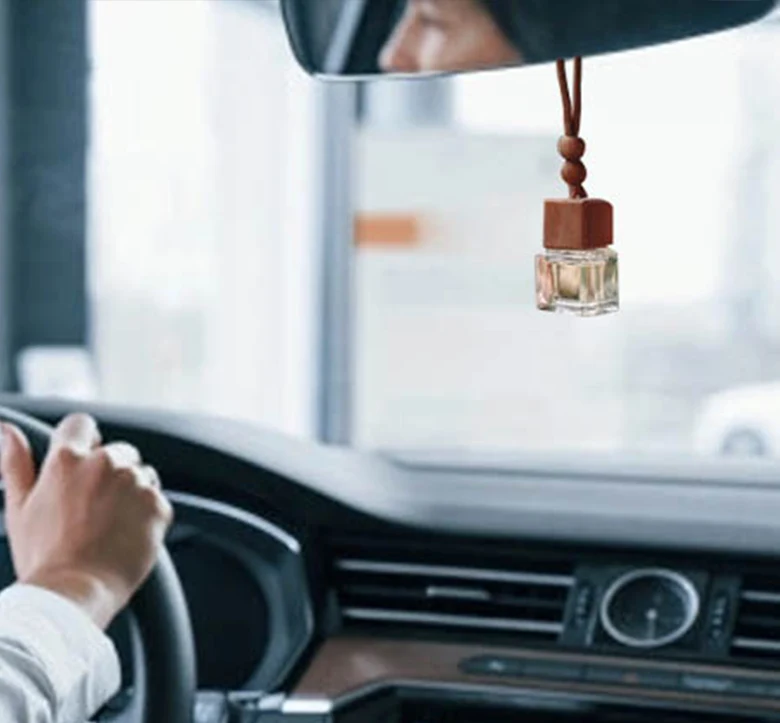
Private Label Perfumery manufactures private label car fragrance in Istanbul, Turkey. The minimum order is 2,000 units per fragrance and per format. Approved projects move to production on a 4–6 week schedule. Formats and materials are confirmed during feasibility, and export documentation is prepared for the destination market.
Key facts
| Available sizes | Format and fill quantity depend on the selected delivery system |
|---|---|
| Formats | Hanging, vent, ceramic, gel and spray formats subject to feasibility |
| Incoterms | EXW, FOB, DDP |
| Markets served | United States, United Kingdom and European Union |
| Commercial basis | Specification, quantity, components, Incoterm and named place |
| Production lead time | Approximately 4–6 weeks after approvals for standard products |
| Minimum order quantity | 2,000 units per fragrance |
Product and component system
Heat cycling, vibration, orientation, material contact and controlled fragrance release are central to car-fragrance development. A format that performs at room temperature may behave differently in a parked vehicle, so packaging and use instructions must match realistic conditions.
The working bill of materials normally covers fragrance delivery body, absorbent or carrier system, closure, attachment, label and retail pack. Each component must be identified by supplier code and approved finish. Compatibility is evaluated against the intended formula, filling method, storage conditions and distribution route rather than assumed from visual similarity.
Building a decision-ready specification
A useful manufacturing brief identifies the customer, destination market, sales channel, target retail position, quantity range, packaging direction and required launch date. It also separates items that are fixed from items that may change. A reference image can explain visual intent, but it is not a technical specification. Dimensions, materials, finish standards, artwork files, tolerances and approval samples must be recorded in writing.
Component availability should be checked before the brand commits to photography or launch communication. Stock components can shorten the sourcing path, while custom colors, decoration, molds or specialty closures may introduce separate supplier minimums and longer procurement sequences. The commercial quotation should distinguish formula development, samples, components, decoration, filling, packing, testing, documentation and freight so buyers can compare equivalent scopes.
Samples and approval control
Car fragrance is evaluated in a small, hot, enclosed space, which is unlike any other format. A coded reference is assessed in the intended delivery system — hanging card, vent clip, ceramic, gel or spray — because the carrier decides the release rate far more than the composition does. The same accord that reads balanced in a room can be overwhelming in a cabin.
Longevity is assessed over weeks rather than hours, since the product is bought on how long it lasts. Where a project covers several formats, each is sampled separately: a gel and a vent clip built on one accord will not perform alike.
Quality and production release
Release depends on the delivery system. Hanging and vent formats are checked on saturation consistency, sealed-sachet integrity and clip fit; gel formats on fill, seal and surface condition; sprays on spray pattern and dosage. Print and decoration are checked against the approved artwork in every case.
Because these products sit in a hot cabin, appearance and release behaviour are verified against the approved reference rather than assumed from ambient testing. Batch records tie released goods to the approved carrier, fragrance load and pack format.
Where a project runs several formats on one accord, each format carries its own release criteria, because a hanging card, a gel and a spray fail in entirely different ways and a shared checklist would miss most of them.
Packaging artwork and claims
Artwork should move to print only after the destination markets, responsible economic operators, formula data, nominal content and packaging dimensions are confirmed. The available design area is not the same as the printable or legally usable area. Barcodes, warnings, ingredient information, responsible-party details and batch coding must remain legible after production.
Claims such as natural, clean, long-lasting, non-toxic or sustainable require evidence and context. A supplier statement about one ingredient does not automatically substantiate a finished-product claim. The brand remains responsible for ensuring that marketing language is accurate, supportable and appropriate for the market in which it appears.
International shipment planning
Transport treatment follows the approved formulation and the delivery system rather than the category. A spray format and a sealed gel are not handled alike, and an alcohol-containing spray can attract the same dangerous-goods treatment as perfume. Classification is confirmed at feasibility so the route is not discovered at booking.
Most car fragrance formats are light and low-value per unit, which makes carton efficiency and unit count per carton unusually important to landed cost. Sealed formats also need protection against sustained heat in transit. Quotations are issued EXW, FOB or DDP.
Where a set combines formats, the most restrictive component decides the treatment of the whole consignment, so mixed cartons are confirmed at feasibility rather than assumed to travel as the lightest item in them.
Project pathway
- Brief and feasibility. Confirm product, market, quantity, channel, price position and packaging direction.
- Development and sourcing. Prepare formula or fragrance options and confirm compatible components.
- Approval. Record the approved sample, components, artwork, pack configuration and quotation.
- Production and shipment. Manufacture, inspect, release, pack and coordinate the agreed delivery route.
Market-specific planning
The finished mixture and delivery format determine applicable safety, labeling and transport duties. Claims and warnings must be reviewed for each destination rather than copied from a perfume or room-fragrance label.
Regulatory roles should be assigned before artwork approval. The manufacturer can provide agreed production and formula documentation, but the brand, importer and appointed Responsible Person retain the duties assigned to them by the destination market. Current requirements should be verified with the relevant authority or qualified adviser before launch.
Frequently asked questions
Why is car fragrance evaluated differently?
It is used in a small, hot, enclosed cabin. Release rate and intensity behave unlike a room product, so the reference is assessed in the intended delivery system rather than on a blotter.
Does the format change the fragrance decision?
Substantially. Hanging card, vent clip, ceramic, gel and spray release at different rates, so one accord will perform differently in each and each format is sampled separately.
How is longevity assessed?
Over weeks in the intended format, because duration is what the category is bought on.
Are car fragrance products dangerous goods?
It depends on the formulation and format. An alcohol-containing spray can attract the same treatment as perfume, while a sealed gel may not. Classification is confirmed at feasibility.
What fixes the fill quantity?
The selected delivery system. Format and fill follow the carrier rather than being set in advance.
Can one carrier be swapped for another after approval?
No. The carrier decides the release rate more than the composition does, so replacing a vent clip with a gel produces a different product even when the accord is unchanged.
What is checked at release for sealed formats?
Sachet integrity, saturation consistency and print against the approved artwork. A sealed format that leaks or varies in saturation fails in the cabin rather than on the production line.
Related buyer guides
- Car Fragrance Product Formats
- Home Fragrance Packaging Safety
- Fragrance Sample Approval Process
- One Scent Across Product Categories
Request a product quotation
Send the destination market, estimated quantity, preferred format, fragrance direction, packaging reference and target date. The response can then separate confirmed scope from decisions that still require samples or supplier quotations.
Start a projectRelated formats
Car fragrance sits in the same home-and-auto group as the other ambient formats. See room fragrance, scented candles and private label perfume.